Sunday, 6 February 2022

The B-Word two years on, and a book to remind you....


I watched that chancer Johnson's less than sincere apology in the House the other day when the Grey report dropped, with a mixture of amusement and disgust.  I'm not sure anyone in the country was fooled for a minute, especially after May and Starmer and Blackford dismantled his posturing - the man is clearly the most damaged of damaged goods.  His response  to Starmer's initial rebut was disgusting in the extreme - raising the memory of Jimmy Savile in a crude and inaccurate allegation against the former DPP to deflect criticism away from himself was uncalled for and rightly criticised by most - even some of his own allies - , and I can't remember ever seeing a Member looking as angry as Starmer rightly did.  Johnson's subsequent "apology" was even less sincere than anything he's said in the wake of Partygate (if that's possible).  So much for the disgust.

The amusement came when he started reeling off his achievements since becoming PM, led of course by "getting Brexit done" (as if that is something to be proud of....) and defeating Covid (which is still raging across the world, in case he hadn't noticed, even if less virulent than before: and the improved situation is completely down to scientists and health workers, NOT Boris Johnson!).  The claims would be laughable if they weren't so tragic.

-----------------------------------------------------

But the purpose of this piece in not to give Johnson another flogging (even though he deserves it) nor to go over the old ground of Brexit - as Johnson rightly points out, it's done.  Whether people agree with it or not, nothing will change for a generation.  I have not a shred of doubt in my own mind that the Leave vote was the biggest electoral mistake in the country's history, and the worst is yet to come.  Many of the economic effects have been masked by the measures that had to be taken over the past couple of years to manage the Pandemic, and in this respect Johnson and his co-Brexiters have been very fortunate.  But that will not last forever: as the economy opens up again, and the empty shelves, rising prices and supply problems that are becoming increasingly common (ask any trucker stuck for up to 16 hours on the M20 this week) start to bite.  It will get worse before it gets better.

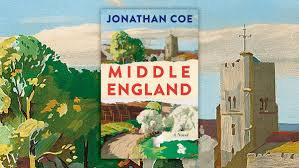
I suppose this Parliamentary pantomime struck me particularly strongly as I was at the time finishing reading an excellent book, "Middle England" by Jonathan Coe.  Based in and around Birmingham, the novel charts the fracturing of an ordinary working class family, largely through the unexpected viciousness that characterized much of the 2016 Referendum campaign.  It's an excellent book, well researched and well written, and covers all the key events leading up to the vote and the chaos the result led to (and indeed is still being faced by people across Britain to this day).

The politics isn't forensically examined but there is no need for that: probably everybody in the country still has them fresh in their minds.  The few real life characters referred to by name - notably Cameron and Corbyn - do not come out of it well, nor do they deserve to.  Cameron is blamed and slated, rightly in my view, for being a wealthy Old Etonian Tory with a very light grasp on working class Britain, for calling the Referendum in the first place, then complacently expecting the Remain side of the argument to win right up until the last few days of campaigning, then being cowardly in resigning within hours of the result being declared, despite insisting throughout the run-up to the vote that he would never do such a thing. In doing so, he created a power vacuum that May and Johnson have so far failed to fill.  Corbyn, meanwhile, comes across as an ineffectual and incompetent Opposition leader whose politics (whether Marxist, Communist, Trotskyist or a mix of all three) turned out to be both irrelevant and outdated, and incapable of making any kind of commitment one way or the other - all of which I would suggest is completely true.

The increase in racism and xenophobia that characterised much of the Leave campaign - something else Johnson should be ashamed rather than proud of - is well described, as were the Birmingham riots a couple of years earlier, and the increasing sense of alienation felt by older people (that I recognise from within my own family), as well as the brutal and unnecessary murder of Jo Cox, are all movingly woven into the tale.  I would strongly suggest that none of these societal problems have been solved or even addressed by Brexit, nor are they likely to be resolved by this Government: it's something else that will take a generation to unwind (if it ever is).

But the book is not all doom and gloom - there is humour there too.  The vacuous individuals that came to the fore in government circles during Cameron's two terms (the coalition with the LibDems and his own Tory majority) are brilliantly illustrated by the recurring character of a slimy Deputy Press Secretary from Cameron's office, who speaks contradictory nonsense in as fine a selection of sound-bites as I've ever seen in one place.  He is picture perfect, and meets a suitably humiliating end with Cameron's demise and May's ascent.  There is also the bumbling would-be author struggling to finish his meisterwerk and find a publisher - now that one really rang true! - who ends up opening a writing school in rural France without any students to speak of, but still manages to get long listed for the Man Booker Prize.  And there is his best school friend, now trying to make a living as a children's party entertainer engaged in an intense and ultimately violent rivalry with another clown.

The blurb on the cover describes it as "the Brexit book everyone should read".  I'm not sure I would put it that strongly, but it is a very very well written and entertaining piece of work that should resonate with  anyone who, like me, lived through those turbulent times  It would also make a damned good movie or tv special, that I would certainly watch.

I'm not sure Our Leader would share my view, though - but then the man has no taste.

Monday, 24 January 2022

Putin's posturing or real conflict?


I spoke to my sister the other day.  She is getting on in years - passed 80 last year, without appearing to be speeding - but still very active.  She lives alone now, a widow, in a small bungalow near the north Norfolk coast that has a big garden, landscaped lawns and flower beds at the front and deliberately "wilded" at the back and sides, with a fish pond, high hedgerows bordering the fields beyond, patches of meadow grass and wild plants everywhere.  It's a lovely idyllic place that I visit as often as I can, with benches scattered here and there in shady spots, to sit and enjoy the sunshine and fresh air in the summer months, sipping a cold beer or a glass of wine, and watch the multitude of wild birds swooping in and out of the hedgerows and feeders that are rigged on posts beside the washing line.  She and her late husband were avid twitchers, driving miles throughout the year to different nature reserves to enjoy the wildlife, and her binoculars are always at hand still.

She goes off on the community bus every couple of weeks with a group of old friends, all of an age and situation, to the nearest big market town, where they spend a couple of hours doing a bit of shopping, then meet at a coffee shop and have a slice of cake and a cappuccino or latte, and a good old gossip, putting the world to rights, before returning home on the community bus.  She loves it.  What with that, and caring for the garden and washing and ironing and cleaning the cottage, and popping next door every day for tea and a sandwich with the neighbour (widowed last year and recovering from hip replacement surgery), my sister is arguably busier than I. 

But right now, she said, she is very worried about me.  She has seen the news reports on the BBC and on ITV News of the difficult situation on the border between Poland and Belarus, and now close by between Russia and Ukraine, and although her geography is sketchy she knows that Poland is close to both those countries too.  She also knows that where I live is not more than a couple of hours' drive from both Belarus and Ukraine - which is true enough - and that politically the situation here is a little, shall we say unsettling.  Which is also true enough, although receiving nowhere near the press coverage it deserves (in Britain at least), and restricted pretty much to the various arguments between the Polish government and the EU - and even that seems to be rarely mentioned and when it is, misreported.  

From all she has seen and read, she is convinced we are on the brink of war, and how will we cope?  Will my family be safe? Is the car packed ready to dash for the German border at the first sight of a Russian tank crossing the border into Poland? Well, I tried to soothe her troubled mind, and assured her we were ready to go at a moments notice, and the situation wasn't quite as bad as all that, and we'd be okay, don't worry........  But I'm not sure she believed me.  I'm not really sure I believe it myself.

The main participants in the search for a diplomatic solution are simply too erratic to trust.

---------------------------------------------------------

First among them, of course, is Putin.  He sees himself as the New Czar of all the Russias, and numbers both Belarus and Ukraine among them.  A few years back I wrote a couple of pieces on my old blog, The World According to Travellin' Bob, about the man's obsession with Ukraine.  I called the essays "Ukraine against the Russian Bear".  and "What should we do about Putin?"   I published them in March and July 2014, and you will find them at The World According to Travellin' Bob: Ukraine versus the Russian Bear. (travellin-bob.blogspot.com) and The World According to Travellin' Bob: What should we do about Putin? (travellin-bob.blogspot.com) respectively, when a similar state of tension existed, and thousands of troops were massed along the border and there were invasion fears.  To summarize, both pieces dealt with Putin's culpability in the invasions of Crimea and the Donbass region and the mass murder of 300+ passengers and crew aboard Malaysian Airlines flight MH17.  My view then was that he should be brought to justice in The Hague for war crimes and suggested extreme personal sanctions against him (not the Russian state or his associates) including seizure of assets and a global blacklisting of his passport to prevent him leaving Russia as an immediate and proportionate requirement.  Neither happened, of course.

Since then, the conflict in Donbass continues unabated, Crimea remains occupied and quiet, and Putin has had free rein.  For four years he was blessed with an incompetent US President, Mr. Trump, who basically believed everything Putin told him and refused to do or say anything in the least bit critical.  Putin has brutally clamped down on political opponents at home and abroad: the Salisbury poisoning of the Skripals and later, on a domestic flight, Navalny,  In addition, what passed as a free press has all but disappeared, with newspapers, magazines, tv stations and internet channels even lightly critical of Putin closed down, editors and journalists imprisoned.  These are the actions that have gained international attention, and no doubt there are thousands of other similar actions that have not been covered.

Amid all the accusations, Putin has played a classic straight bat.  He has either denied all knowledge - as in the cases of the Salisbury poisonings or the Malaysian Airlines mass murder (no matter the strength of evidence against the state - and it is very strong) - or accepted responsibility but claimed "acting in Russia's interests" or "defending Russian citizens", as in both Ukrainian incursions.  Nobody outside the borders of the Russian state believe a word he says (except for Trump, of course, and he is no longer in office) but equally no-one has the moral courage to call him out.  Essentially, nothing has changed.

Putin clearly is Stalin's heir, more so than Kruschev, Brezhnev or any other of the grey men who succeeded Uncle Joe ever were.

----------------------------------------------------

In Ukraine, meanwhile, Presidents have come and gone, with the office currently held by Volodymyr Zelensky, who at the time of his 2019 election was totally devoid of any political experience, beyond playing the part of the President in a tv series.  His election came as a shock, not least to himself, and is the ultimate "protest vote" from an electorate tired of the existing political class.

He has refused to bow to the demands of Putin, although an extremely fragile ceasefire has been negotiated in Donbass, and remains insistent that both that region and the Crimea remain Ukrainian territory under occupation and should be returned immediately.  Predictably, this has not happened. Zelensky has also, to his credit, refused the demands and veiled threats from Trump, prior to his 2020 election campaign, to start a criminal investigation into the business affairs of the son of Trump's opponent, Joe Biden - a clear case of political interference by the then incumbent US President.  The election was duly lost (or in the view of Trump and his followers, without any credible evidence, stolen) but how much the spat with Zelensky had to do with that is impossible to say.

Clearly,Zelensky has none of the political nous of Putin, nor his willingness to sacrifice anybody to gain what he wants, but he has been prepared to meet force with force.  Ukrainian troops are dug in along the front line in Donbass, and further troops and armoured units moved up to the Russian border in response to Russia's deployment.  All are pledged to defend their country and do whatever their President demands to do so.

-----------------------------------------------------

Which brings us to the third major participant.  The US, for better or worse, is the de facto leader of NATO, its largest and strongest military power, and Russia's - and Putin's - Public Enemy Number One. It has been so since the beginning of the old Cold War, and despite the failure of Communism and the break up of the old USSR remains so still.  As an ex-KGB officer, Putin knows this and believes it more than most: despite his Western, smart cut clothes and often urbane manner.  Joe Biden's election has moved the goalposts.

With Bush and Obama, Putin's relationship with the US seemed relatively even, publicly at least. When Trump was elected, his summits with America's enemies, notably North Korea and Russia, to a lesser extent China, seemed quite cordial: there was rarely any criticism of their leaders (Kim Jong Un and Putin especially), except before the meetings took place, and invariably at the end of them, Trump and his opposite number seemed the best of friends.  After his first summit with Putin, Trump surprised many by defending Putin (on paper his enemy) over claims that Russia had interfered in his election - a claim subsequently proven - whilst criticising, strongly, NATO (on paper his allies) over a lack of investment and threatening to withdraw from the Alliance, while Putin sat next to him with a smug smile on his face.  Clearly, he was tucked comfortably in Putin's pocket.  To this day, the truth about what was said in private between the two men remains a matter of conjecture.

Biden's election has changed all of that, and taken away the apparent certainty that Putin and Russia could more or less do as they liked without American or NATO sanction.  Before his first summit, Biden stated that he knew what the real Putin was like, based on his own experiences with the Russian leader as Obama's Vice President, and was "going to look him the eye and make it clear to him that America was back in business".  I assume he did so, because at the subsequent Press conference, Biden was his usual grandfatherly self while Putin glowered alongside him and saying little.  Relations between the two have remained frosty since then - s return to normality that Putin clearly does not like.

---------------------------------------------------------

These then are the main parties who, somehow, must navigate a way through this crisis.  On the sidelines sits Belarus, close allies and customers of Putin with a dictator who lost an election a couple of years ago but remains in power after suppressing the opposition be expelling or imprisoning its leaders and using troops to curb public demonstrations, all of it supported Russian forces and Putin's agreement.  The country also has a border with Ukraine, and thus could easily be used by Russian forces to provide another line of attack.  It also has a border with Poland that throughout this winter has been a flashpoint as thousands of migrants from Afghanistan, Iraq and Syria have attempted to enter the EU via Poland.  The refugees are caught in a standoff on the border, blocked by Polish troops pushing them back through the now snowy forests into Belarus, where troops are waiting to push them back to Poland.  There have been many deaths and will be many more.  The Belarus state is widely believed to have provided assistance in getting the refugees to the border area specifically to provoke a response from Poland and stir trouble in the EU - again, with alleged support from Russia, in allowing flights carrying refugees to overfly its territory and providing unmarked militia to assist the Belarus police and security forces.  

Poland also has a long border with Ukraine, so there is a fear that in an escalation of hostilities Russian troops could easily, once in Ukraine, simply turn right and be at the Polish border in a few hours.  Poland is a close ally of Ukraine and already home to a couple of million refugees fleeing the Donbass and Crimean conflicts, and in addition has not forgotten the way the then USSR invaded eastern Poland on the same day as the Nazis invaded in 1939, thanks to the Molotov-Ribbentrop Pact that only came to light after the war ended. The invasion in the east caused many more casualties than did the Nazis, with entire villages wiped out brutally.  This is often overlooked in western European war histories, or its effects minimized.  But not by Poles.  

Poland also has an intense dislike for the present Russian regime resulting from the Smolensk disaster in April 2010 when an air force plane carrying the Polish President, his wife and many senior military commanders - virtually the entire "elite" crashed in fog as it landed in Smolensk, killing everyone on board.  The passengers were travelling for a commemoration of the Katyn Massacre nearby, during World War 2, in which some 22,000 Polish military officers and intelligentsia were murdered by Russian NKVD troops who blamed the Nazis - again, the truth was not revealed until after the war ended.  Although multiple enquiries showed the Smolensk crash was a result of a mixture of bad weather, poor air traffic control equipment and pilot error, the belief that in some way Putin and Russia sabotaged the flight or ATC equipment and deliberately caused the crash is still widely held, especially by the ruling party led by the late President's twin brother.  Smolensk is in Belarus......

---------------------------------------------------------

So my sister's fears, going back to the start of this piece, are justified, and I share them (though perhaps not as strongly).

Putin has made a number of demands and been consistent throughout - even since before Crimea and Donbass incursions  He still considers Ukraine to be a part of Russia.  He will not accept Ukraine joining the EU.  He will "under no circumstances" allow Ukraine to join NATO.  He insists that both the EU and NATO "stop their eastward expansion" as this impacts Russia's "sphere of influence".   Russia (i.e. Putin) will take "whatever steps are needed" to prevent any of this happening.  

The response from the west - i.e. the US, the EU and NATO - has so far ruled out all of Putin's demands.  They have pointed out that Ukraine is an independent country and a democracy, albeit partly occupied (references to Donbass and Crimea) and demanded again Russia's withdrawal.  It has pointed out that Ukraine has not applied to join either the EU or NATO, even though it has expressed a desire to do so at some point, and any application by a sovereign democracy will be considered on its merits. It has also pointed out that any action seen to threaten a NATO member state will be considered, as per its charter, as a threat to the entire Alliance, to be defended by whatever means.

Additional NATO troops are being moved into Poland and the Baltic states, mainly US and British, as well as "observers" and "advisers" to Ukraine - which mirrors what happened in the early 1960s when the US sent them into Vietnam - and we all know how that went.  Not well.

So it does not look promising, but I hold on to one big hope.  Putin may be many things - a dictator, a gangster, a cold blooded killer, a devious and cunning operator among them - but I do not believe for a minute that he is stupid.  You don't drag your way from the rubble of post-War Leningrad to the Presidency of Russia (for nearly 20 years now), and maintain an iron grip on power, without being very smart as well as very nasty.

I don't believe he wants a war. I can't see what he would gain, strategically, in a bloodbath - because even with conventional weaponry, no nukes. that's what it would be - where much of the blame lies squarely on his doorstep. It's one thing interfering in a far away country, having a proxy war in say Syria or Libya or hacking computer systems and employing troll farms to get your man elected, and another thing entirely kicking something off in Europe, close to home, that could cost hundreds of thousands of lives.

I think he is testing out Joe Biden, testing out American resolve - NATO's too.  These is no doubt if Putin says he will do something, then he does it, but the unanswered question is does NATO and old Joe have the same resolve.  How will the new German govcrnment react (given the country's reliance on Russian gas)?  What about France, the Netherlands, Spain - all still in a Covid crisis and suffering public resentment over that?  Britain, with Boris Johnson and his government falling apart at the seams?  And let's not forget the problems Biden has at home.......

These are difficult times indeed.


Wednesday, 19 January 2022

A State of Mind: Part 2. Still workin' on it....


So it's a little under four months since I posted, at the end of September, that I was suffering from Depression.  Not a bad case, to be sure, no suicidal thoughts or anything of that nature - and thank God for that! - but bad enough to be affecting my day-to-day life.  I said in the post that I intended to share my journey through this problem, in the hope that my experiences might help others going through the same thing.

We're into a New Year, I hope a much better year for all of us, so it's about time I kept my word and continued the story.  

-----------------------------------------------------------------

In truth, not a huge amount has changed.  It's still there, and I know it will bite sometimes, usually when least expected.  I can be as right as rain for hours, or sometimes days, at a time, feeling full of the joys of spring (even in the depths of this cold Polish winter), making plans, feeling optimistic......feeling - normal.  Then, without warning - BANG!   That all vanishes in a puff of smoke, and it's back to doom and gloom again.

The trigger for this sudden mood change?  Well, anything really.  A little spat with my Beloved over something trivial that would normally be laughed off or totally ignored.  One of the kids being typically obstinate when asked to help with something (they're teenagers, for God's sake, so I expect them to be awkward little sods - so why does it affect me so badly?).   The dog barking because she's bored and wants to play and I'm busy cooking the kids' lunch before they get in from school.  Or demanding to go out for a walk but then refusing to go more than 10 paces before turning and trying to drag me home.  

Or another piece of tomfoolery from that clueless oaf in Downing Street who seems hell bent on destroying my country, or that silly bigoted old sod running my adopted country from his seat on the back-benches, equally hell bent on dragging this place back 50 years to the grim Communist 1970s. Both of them, in their different ways, are threatening the futures of my children and grandchildren.  And I can do nothing about it.....

All of these and more have blown me out of the water since the turn of the New Year.

----------------------------------------------------------

The thing is, when it does happen like that, it's so difficult to explain why I've suddenly fallen from, figuratively, Life and Soul of the Party to foul tempered Grumpy Old Man in the space of about 10 seconds.  I know it's partly because those closest to me simply don't really understand what I'm going through or what's happening to me. To be honest nor do I, not really. The kids are probably too young: they just see this bloke who used to be such fun getting old before his time and don't know what to do - in fairness, neither so I.  All I can do is try to keep a lid on my worst excesses and if I do overstep the mark, apologize.  Whether that is good or acceptable parenting, showing unnecessary weakness, I'm not sure....but it's how I am.  Taking after my dad.

And for my wife, God love her, it must be worse, because I'm not the man she fell in love with and married all those years ago.  I know, I know: we've been together 20 years now, so of course we've both changed, and given the age difference it's bound to be more noticeable in me, but still.......  We've always been able to laugh our way out from the various crises that have befallen us, and some of them have been fucking awful (and are still shadows on our lives after many years), but that seems to be more difficult to do now.  But I forgive her, because I know some of those crises have hit her much worse than me and have left her in a difficult enough position as it is without having to walk on egg shells when I'm not up to snuff.

I suppose a better and wider support network would help ease some of that pressure, but unfortunately that is not something I have.  There is a handful of old friends and family that I keep in touch with via social media, and one particular old work colleague that I Skype with on a regular basis to talk sport and politics and put the world to rights (and those calls are huge help), but that's about it.  Calling some of them on the phone or via WhatsApp is challenging, because to be honest they have their own busy lives and families and problems to cope with, so getting through can be difficult and calls back rare.  Again, I understand their positions.  Locally, there is a handful of old friends, but none that I feel really comfortable unburdening on - whether through good old English reserve or the danger of Lost In Translation moments is open to question.  Again, there is one old work colleague I talk to and meet from time to time for coffee in one of the malls, and doing so can help a lot, but for good and understandable reasons there are times when it's simply not possible to meet up.

In reality, I guess I need to find a therapist I can unload on, someone not from my family and friends, but a professional who can listen and talk and guide without being judgemental, but here they are difficult to find.  Mental instability, for want of a better term, is the complaint that is never mentioned over here, and seems to be treated by cocktails of drugs that can be addictive with occasional stays in cold and forbidding hospitals.  I know someone who has been receiving treatment in this way for "depression" for over 20 years and shows no sign of being even close to cured.  It's not something I'm prepared to even consider, frankly.  But psychotherapists appear thin on the ground, those with competence in the English language probably thinner still and no doubt charging premium rates that I doubt I can afford.

--------------------------------------------------------

So there you are.  The good days outnumber the bad, thank God, as they always have since the start of this journey, and I don't seem to be any worse.  I don't feel it, anyway.  But I can't honestly say I feel much better.  

I'm trying to focus my time on doing things I enjoy - writing this blog being a case in point: I think I've been more productive in the last two months than in the previous two years, or at least it feels that way, and the work has a bigger (albeit only slightly...) audience that I am trying to figure out how to grow further.  It's also helping to unblock the creative mind and I'm getting back to other writing projects that hit a brick wall at some point during the Pandemic.  I still have concentration issues, though, not only with writing but with reading too: even books I really enjoy are taking much longer to get through, and I find my mind wandering after only a couple of pages. I'm not sure that is the Depression or a Covid hangover though, because the problems both came in when I was ill with that, as did the poor and erratic sleep pattern and general lethargy that plague me.

I'm ok, I guess - could be better, but I know I could be a hell of a lot worse.  I'll keep battling on, and hope and believe that getting to spring and warm sunshine will make a big difference.  My exercise regime is a bit hit and miss now, but hopefully come the warmer weather I can ratchet that up a few notches and that should also help.

We will see soon enough, I suppose.  As ever, I ask you to Share this with your circle, and would welcome any comments or advice or criticism, no matter how trivial or brutal - it all helps and makes the effort more worthwhile.  It might also help sort out these mindspace issues as well, ease the confusion I often feel.

Thanks, and stay safe, all.

Friday, 7 January 2022

Home Life: A Tiny House for Travellin' Bob?


I read an interesting article on the BBC News website the other day, about the growing popularity of "tiny homes", and how they fitted in nicely with our eco-awareness in these climate changing years.  Like most such movements, it seems to have originated in the US and spread across the pond to us in Europe (and elsewhere).

Tiny homes are essentially little houses, sometimes a single storey with one room serving as your total living space, and others a bit bigger, with an upper floor, sometimes not much more than a balcony, to hold your bed. The biggest have even gone as far as to have two upstairs bedrooms - an example wasn't shown, so I have a problem envisaging that one.  They come in a variety of styles: some like old gypsy caravans, some like glorified garden sheds, some looking like proper cottages complete with gabled roofs and decking surrounds, and some modernist glass cubes.  The common factor is they are all, as the name suggests, bloody small: perhaps 10m x 7m.

Given their size, living in one requires compromise: you simply can't have the amount of "stuff" that accumulates in a normal household.  From your clothes down, you must downsize: no shelves full of books and ornaments, no racks of CDs and vinyl to play on big sound systems with multiple decks and speakers.  No sofas and armchairs  (unless they're built in and fold down from the walls or something) and 6 place dining tables.  Smaller cookers and fridges and sinks - and forget about a washer and tumble dryer or dishwasher!  Less china and cutlery and pots and pans, small shower cubicle and toilet combined, with a proper bath merely a memory.  But on the upside, your heating bills, especially if the place is properly insulated as part of the build, will be much reduced (and often met by using a solar panel on the roof or windmill generator, meaning you are self sufficient, living off-grid with no mains connection).  The size of the places also means you could put the place in your parents' back garden and avoid rates and complex planning permissions - which would also apparently not apply if you were to buy a small part of a field from Farmer Giles down the road. 

I've seen a number of programs on the telly about the things, mostly from the States where the movement is very popular and growing by the day - there is more space to build for a start, bags of appealing countryside and wilderness around even the biggest cities - and I have to say I can see the appeal.....

-------------------------------------------------------

But the article made me think about my own home history, and even its future.

My first home was in a three bed-roomed end of terrace council house with a big garden.  I was born in my mum and dad's bedroom and lived in the house for the first 25 years of my life.  There was no central heating, and for much of my life we had coal fires, meaning regular deliveries on hundredweight sacks of coal, tipped through a wooden door at the side of the house into an under-stairs cupboard we called "The Coal Hole".  After my dad died, when I was 19, the real fire gave way to a three bar electric fire (that was designed to look like a real fire, with coloured lights and little spinners that spun in the heat from the bars and made the orange light flicker like flames) and The Coal Hole converted to a store cupboard that held the hoover and assorted junk we couldn't find anywhere else to put.

The garden was massive, with two front lawns either side of the entrance path, a small back lawn outside the kitchen window and in front of the big shed my dad built with old railway track sleepers, and beyond that a hundred foot vegetable garden.  We never bought vegetables from the shop, as my dad grew everything we needed: potatoes, cabbages, cauliflowers, carrots, runner beans, peas, onions and parsnips, as well as a raspberry bush and a big patch of rhubarb.  Boy, we ate well, and I swear to God they were the best vegetables I've ever eaten, anywhere, and anywhen.  The gardens were my dad's pride and joy - before the war he had been a gardener at nearby Chiddingstone Castle, but the job was gone by the time he returned from service in Burma in 1946 and moved into this house where my mum and my two sisters had lived through most of the war, three complete strangers to him, as indeed he was to them. There were roses growing around the front window, a pair of big and beautiful lilac trees as part of the boundary fence with next door, and borders around the front lawns full of primroses liberated from the hedgerows in the surrounding countryside, chrysanthemums and a host of other plants whose names I've forgotten.

But despite this, as a child the front lawns doubled up nicely for Wembley Stadium or the Oval (depending on the season) for my mates and I to play in, as did the back lawn, and the very top part of the vegetable garden was turned into a very nice Western Front trench and/or Colditz escape tunnel entrance for our war games, once we had dug a hole two foot deep and three across. Remembering the devastation we caused, it must have broken my dad's heart, but all he did was shake his head with a smile, and say "Well, boys will be boys" when my mum was raging at him about our vandalism.

The house is still there, but much changed. The windows have been replaced by modern uPVC double glazing, and no doubt central heating installed.  The narrow front lawn with lilac trees (now long gone) has been paved over to make parking for two cars, and the other front  garden entirely laid to lawn: the roses around the window vanished like the centre bed of primroses and chrysanth's.  God know's what has happened to the back garden, I lacked to courage to go and knock on the front door, introduce myself and ask for a tour.

------------------------------------------------------------

When I married, our first home was a two bedroom semi slum in the middle of a block of cottages at the top of a deep railway cutting and next to the entrance of the tunnel that leads into Tunbridge Wells Central station.  As such, there were about half a dozen trains every hour, noisy diesel powered all, as the lines had not been electrified yet, rumbling past and making the house shake.  Again, there was no central heating, not even a fireplace, the back door opened directly on to our elderly next door neighbour's back door, and the small shared yard led into a walled back alley that ran the length of the terrace.  As for the front garden, it measured 4 feet by three, next to the front door that opened onto a narrow footpath by a not much wider road. We had to re-wire and re-plumb the place before we could move in, which meant the entire front patch had to be dug up to take the required plastic piping, and frankly it never recovered from the damage.

We had wildlife sharing the house too: we could lie in bed listening to mice and, I think, rats scrabbling in the loft space.  One night, as we were dozing off, a mouse scurried across the pillows and through my hair, then dropped to the floor as I turned the lamp on - I saw him stroll out of the bedroom door and down the stairs.  We bought mouse traps, baited them and placed them in various rooms, and frequently heard them snap.  But we never caught the creature (or creatures): we always found the traps sprung and the cheese gone, but no sign of Mickey or Minnie.  Eventually, when we moved out after eighteen months or so and one kid, we found where the mouse had lived: under the oven on the dilapidated old cooker was a small storage space that held a baking tray we had completely forgotten about, and we found it when we were packing.  We had only used it once, for a roast when some friends visited, packed it away and forgotten all about it.  It had been full of the dripping from the joint, and our little rodent had made his home there, living off the fat when he could find nothing else.  A good portion of the fat was gone, eaten, and that corner of the tray filled with the creature's droppings.  A nice, cozy and warm place to live, I supposed, and gently replaced the tray.

I was back in the area earlier this year, but I have no idea whether the terrace is still standing: I suspect not, as the whole area has been completely re-developed.  But for a while, it was home, and my first child was born while we lived there.    

-----------------------------------------------------------

From there, we moved a couple of miles to a suburb, High Brooms, into a larger cottage.  We had been trying to move for a few months and had been sent this particular place three or four times by estate agents, but ignored it.  Then we got it again, and was about to throw it away (again) when I read the description in full.  It seemed worth a look, so we made an appointment to view the next day, a Saturday, liked it, and had an offer accepted on the Monday.  Things moved very quickly for a change - we had a buyer already lined up for our place and a mortgage agreed in principal - and were moving in within about a month.    I guess some things are just meant to be.....

It was another end terrace, and had three bedrooms (if you accept the big front one that was divided in two by a plywood partition and sliding door was two rooms), and a rear extension that on the ground floor housed a kitchen/diner and toilet and upstairs the bathroom, another toilet and a reasonable sized room listed by the estate agent as a fourth bedroom but I used a study.  The front garden was about twice the size of our old destroyed one and laid to grass (easy to maintain), and had a good sized rear one laid to lawn with flower beds down one side, a footpath down the other and a decent tool shed for the lawn mower we had to buy.  There was also a small rear patio to enjoy the summer sun and a cool beer.  Luxury!

It was a nice neighbourhood, quiet and in my schooldays (my old big school was a ten minute walk) considered very upper class.  Some of the bug bungalows and houses closer to school probably were, but my end definitely wasn't - there was a small industrial park at the far end of the road, and our neighbours, all really nice people, distinctly working class like me.  The station was a ten minute walk away, down a steepish hill that was a bugger to climb after a long working day and a couple of beers, there was pub about halfway and a very good fish and chip shop opposite.  We were fine there, took our time doing it up, had another kid, and one evening finished our last project: a complete redecoration of the lounge at the front: fitted shelves, the fireplace opened up to burn coal again (though we never did: the central heating was fine - but it did look good).  The kids were asleep, we sat in armchairs, I cracked a beer, put some music on and looked around.

"Make a decent profit on this, I said.  "Let's move."

So we did.

---------------------------------------------------------

Nearly thirty miles, to a new "village" in north Kent, and a brand new three-bed semi - we had to wait six months for the thing to be built, and then another three to sell our High Brooms home, but we got there eventually.  Sometimes, even now, I wonder if we did the right thing: we were perfectly ok in High Brooms, plenty of room for our family, fine for my commute into London for work, and then financially quite solvent.  But the lure of profit drove us to cash in, and in fairness we did make a good bit - and spent it all, plus an increased mortgage, on the new place.  

But on the plus side, the house was fully and professionally decorated for us by the developer (we were able to choose the carpets, wallpapers, kitchen and bathroom stuff and light fittings), and had a rather cool spiral staircase. It also had an integrated garage, so forced me at long last (I was approaching 30) to finally learn to drive.  The back garden was decently sized but we needed to landscape it and lay the patio ourselves: it  was hard work, took the whole summer, but I really enjoyed doing it.  Our next-door-but-one neighbour helped us and I returned the complement helping him.  Like us, his was a young family, and we all became firm friends.  He was a self-employed printer, and earning much more than I was, and eventually moved to bloody great six bedroom place a few miles away and we lost touch - I hope he and his family are still well.

As a new village (it hadn't existed 10 years before and had no history), we were just one family in a new and growing community of young families - and community was the right term.  A few years after we had moved in there was an absolutely monumental snowfall, and our village, on top of a hill, was completely snowed in, roads impassable.  But on our estate, we all mucked in for the first couple of days, helping each other dig our drives and cars out of the chest high snow drifts, sharing shopping runs to the supermarket in the village, using our kids' sledges to carry bags of stuff, and picking up prescriptions from the chemists - all the simple little stuff you take for granted in normal times.  Then on the Tuesday I had to attempt to get to London for work (my boss had been calling three times a day since the weekend's blizzard), so I packed some stuff in a rucksack and headed off on a dark and bitter morning: it was still snowing.  The roads were still very bad, and there were no buses, so I had to walk the four miles to the nearest station.  I was in luck - five minutes after arriving on an overcrowded platform a London bound train came in and I forced my way on.  It was the only one that day.  A ten minute ride and the most southerly London suburbs were snow-free....  I had a hell of a job convincing my work colleagues how bad the situation was at home, in the days long before mobile phones with cameras could have shown the evidence - that had to wait until the pics I had taken on my crappy old Kodak Instamatic were developed.  I stayed the rest of the week in a hotel, paid for by the company, and eventually got home Saturday morning - a thaw had nearly cleared all the snow and everything was pretty much back to normal.

-----------------------------------------------------------

We lived there for about 6 years, and had a final child, before the wanderlust hit us again.  The kids were well settled in schools and we felt very settled, but we felt that we needed one more bedroom, so they had one each, and wanted to remain in the village.  We had made some good friends there and in the neighbouring villages, through school and church activities, and I was helping my mate with my eldest kid's football team (I ended up taking over the coaching and managing of it - great fun).

There were a few neighbourhoods that had four bedroom houses, from terraced through semis to fully detached, with prices to match.  After a lot of views, we narrowed it down to an estate on the edge of the village, surrounded by woodland and open fields, a mix of "out of the box" and unique architect designed houses, but all of them detached.  It was, by popular consent, The Address in the whole place. We only looked at one place, because unsurprisingly houses on that estate did not often come on the market, and made on offer, for the sale price: no haggling.  It had been on the market for a while and offers so far had been refused, but the owner, by now desperate to sell, nearly bit my arm off accepting ours.  That might have rung alarm bells, but didn't....

We exchanged contracts, and the very next night the Great Storm that devastated much of southern England hit.  Once more the village was cut off, this time by fallen trees rather than snowdrifts blocking the roads.  After two days clearing up, things began moving again, and at this point we remembered that there was a massive elm tree in our new garden, and we wondered if it was still standing.  We jumped in the car and drove the mile to the new place, worried that as we had already committed to moving in less than a month, any damage would need to be repaired at our cost.  We were lucky: the tree had indeed been uprooted and fallen, demolishing part of the fence between us and next door. Its top-most branches were across our patio, and lay within a couple of inches of a set of double glazed patio doors.  We agreed with the seller and our new neighbours to share the costs of fence repair and cutting up and removing the tree, and moved in on time.

It was lovely house, and the summit of my house purchasing in Britain.  It was a big detached place, four bedrooms with en-suite shower in the biggest, a separate bathroom and toilet next to it.  Downstairs a huge lounge running the width of the house, and another toilet in the entrance lobby.  At the back, a big kitchen/breakfast room, and off from it a separate dining room.  Outside the back garden, laid to lawn, sloped up to the top boundary from a full width patio with walled garden between patio and lawn.  The patio ran around the side of the house and through s gate to a lawned front garden and double garage (the drive shared with the two neighbours in our little cul-de-sac).  The total plot size was a little under half an acre.

We loved it, and spent some years living happily there, but it became apparent that we had bitten off a little more than we could chew - more work was needed than we had anticipated.  We had to re-plumb rge en-suite shower (it never did work properly), replace the downstairs toilet, and I spent huge amounts of time and money replacing damaged fence panels that had never properly recovered from the storm damage. And we never even started on the badly needed kitchen replacement.   It was a difficult period in my life: my career took a downturn, and for various reasons job choices I made didn't work out and I found myself unemployed three times during the decade. Maintaining a big house, plus feeding and clothing the kids, paying for school trips, uniforms and so on was increasingly difficult on the little unemployment benefits and inevitably debts began to build.  It was a struggle, and other pressures came along too, so that by the millennium we were not in a good place, and it all fell apart.

-----------------------------------------------------------

I found myself starting a new life, in a completely different field (but drawing on my previous work knowledge) and it involved travel - a lot of it.  I lived out of a suitcase, in a succession of hotel rooms in different countries, before settling in Poland where I had a good three years guaranteed work, and gave up on hotels.  Instead, I lived in rented apartments that were paid for by my employer, or more accurately the clients they placed me at.  The big house was sold, but the big profit we made swallowed up in debt repayment and financial settlement, and I haven't owned a house since - or indeed any other personal property in England. Nowadays I'm a fully fledged ex-pat, all my time spent abroad but with regular visits back home to see family and friends. It works fine for me, and I'm very happy.  This is especially true since my new life presented me with a new family, and my rented apartments gave way to a purchase of my own

It's not a house: in the city there were (still are) relatively few available and they are often prohibitively expensive.  As in most European cities, apartments are the favoured housing solution and for the past 15 years I've lived happily in an average sized place, bought new from the developer, in one of the southern suburbs, right next to a Metro station that gets me into the city centre in 15 minutes and by car to the airport in the same time. It's ideal, there is good shopping all round the neighbourhood, and a big network of cycle paths for exercise, including several kilometres through a decent sized forest 5km away. 

I'm used to apartment living now, and even though I've run the gamut of all the main houses Britain has to offer, apart from the really expensive luxury mansions (always way out of my league) I don't miss them, nor the expense that goes with them.  If I miss anything, it's having a garden to potter in, which brings this piece back to its starting point - the Tiny House.

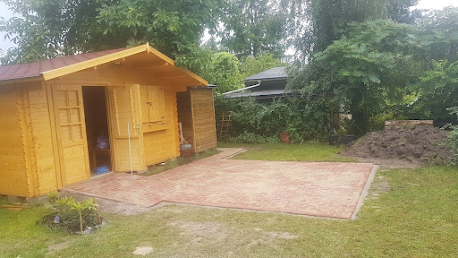
In a few years now, my younger kids will be old enough to have places of their own - this apartment will be a start - as they start out on their own adult lives and careers.  Maybe the Tiny House will give me the opportunity to have a small place that I can enjoy with my Beloved, with a garden and less stuff: a proper downsize.  We've made a start already.  A few years back, we bought a smallish plot of land on a complex of similar plots close to the airport - such developments are very popular across Europe: I've seen them in the Netherlands, Germany, Switzerland and all over Poland - that has lawns, flower beds, many trees (a very productive walnut tree in particular), electricity connection and mains running water.  We've put a decent sized cottage on it, a single room 10m x 10m, and added a brick patio, so right now it's perfect for weekends, barbecues with friends, catching some sun and just relaxing with clippers and a lawn mower.The place lacks a drainage system, so we're restricted to a camp chemical toilet, but that's ok - but it would not suit a permanent dwelling.  At least, not without doing a fair bit of work: there are many more or less permanent residents in the complex, so it's something we could do.

More likely is doing something similar elsewhere.  We also bought a decent double plot at a small seaside village here some years back, and still own it, but until now have not been able to do anything with it due to some planning restrictions.  We now have reason to believe these are no longer in force (or shortly to be removed) so this will open up the option of building something there.  We paid cash for the land so that's done - all we need is to build something on it and develop, essentially, a retirement home.  It appeals to me very much - only 400m from a lovely sandy beach via a woodland walk, and close to shops, restaurants and bars (busy in season, but the village is still undeveloped as the road and rail connections to that part of the Baltic coast have not been developed that much).  

So we'll see.  Maybe this time next year, Travellin' Bob will have his Tiny House by the sea that has frankly been an ambition for most of his adult life!  Or perhaps we'll go totally mad and buy a decent camper van, and become Silver Surfers, cruising the coasts of the Med and the Adriatic and the Aegean, a Tiny House on wheels........

Decisions, decisions......
Wednesday, 29 December 2021

2021: At year's end.......


So that's Christmas out of the way.  Considering in the run up I had absolutely no interest in it this year, it was pretty good and I enjoyed it.  The weather helped - proper Christmas weather, very cold, a decent bit of snow, but lots of sunshine and blue sky so that walking the dog was a pleasure rather than a chore.  I can remember the odd Christmas like it when I was a kid - I think, but I could be hallucinating - and certainly the first few I celebrated here in Poland were like this.  Climate change has made a nonsense of that for the last few years, and we've walked to Mass or driven to relatives in warmer, wet and windy weather instead. The new normal, I guess, with this year the exception.

Anyway, it was quiet and we spent it at home.  No visitors this year, just we four, plus Lulu the dog and Jazzy the cat, and it was cool.  We ate well, made the effort to dress formally (that is, for me, suit and white shirt and tie), watched the mandatory wall to wall Minions movies, and Fast & Furious, and You've Got Mail, plus local movies with a vague Yuletide theme, and just.....relaxed.  We managed to forget about all the Covid stuff, and the mess the governments of my homeland and my adopted country are making of things.  I even managed to put the depression and continuing discomfort in my arm to one side and feel......happy.  First time for a while.

-----------------------------------------------------------

So with the New Year looming large, I'm not going to look back.  This year was not much different to last year - which is to say, pretty crap - and catching Covid and buggering my arm and everything that has followed on from that really made it worse still (at least from a personal perspective).  I shan't be sorry to see the back of it.

I no longer make New Year resolutions, on the basis that they never lasted more than a week and left me feeling a bit guilty when I inevitably broke them.  So when I was I think 18 or 19, I resolved to stop making them - and voila!  I've kept that one ever since, 50 odd years.  Simple really. So I'm going to carry that on and just get on with my life without making rash decisions that I'll never be able to live up to.  Sure, there are targets - weight to lose, worry less, sleep better, laugh more, spend more time with my Beloved, do more things that I want to do rather than have to do - but nothing I intend to hold myself (or anyone else) accountable for.

But I do have some wishes.  I guess World Peace, an end to poverty, clear and definitive progress on ending the climate and Covid crises, and a good bit less abuse and fake news nonsense on social media are probably a bit too much to ask for for one year - but, hey, Mankind, you can do it if you really really put your collective mind to it (but I'm not holding my breath).  

I hope and believe we will be in a better place this time next year, at least as far as the Pandemic is concerned, because there seems to be a more concerted effort globally to beat it than any of the other things wrong with this planet.  Too many governments are still not taking climate change seriously enough.  Too many people (from government down) are too selfish to do much about poverty.  Nobody who posts bad stuff on social and gets a kind of sado-masochistic kick out of doing it and pissing people off cares about that, and the harm it can (and does) cause is beyond their imaginations.  So none of it is likely to happen any time soon because human nature right now won't let it.  The changes needed take time, it's evolution, always a slow crawl, when we need a sprint.

So my wishes are of a more personal nature:

  • I wish continued health and happiness to my elderly sisters as they continue through their ninth decade.  I hope to God I'm as fit at their age!
  • I pass every good wish for 2022 to my various cousins and nieces and nephews scattered all over the world, in England, in Australia and in Canada, some of whom I haven't seen for forty years or more.  Stay safe and stay healthy and happy, all of you.
  • I want my sons and their partners and my grandkids - I love them all to bits! - health, wealth and happiness in everything they do. I have no doubt they will rise to whatever challenges they face and win, because it's what they do. I'm proud of them.
  • I want my younger two to study hard and do well at school, but still find the time to be kids and have fun, make memories for themselves.  And stay safe!  And keep smiling and making me laugh!
  • I want my Beloved to stay as fit and healthy and strong as she is, and know that we love her more than she realizes sometimes.  She is my rock and we forget ourselves too often, put others' needs before our own: we must make time for ourselves, together.
For myself: well, mainly I want to get through 2022 without breaking anything or catching anything. I'm fed up with not being right, physically and mentally, and my biggest challenge is to get out of this funk that I've been stuck in for the best part of three years now.  People have remarked how I've changed, and I have.  It would be easy to pass it off as simply growing older, but it's not just that.  There is more to it that I need to understand and fix.  I need to smile and laugh more, to stop getting angry and frustrated all the time at the stupidest, piddly little thing.  That is simply not me.

I need to find myself again, and not let go.

---------------------------------------------------------------

This blog is a way to help me do that.  Instead of venting my anger and sharing my joys and interests and frustrations on my nearest and dearest I can do it here, and perhaps entertain you at the same time.  The last few months, there has been an uptick in page views and a few decent discussions, and I thank all of you who have joined in for contributing your time and thoughts.  I ask you to continue that support, and spread the word, get other people - your own Friends and Families - to join in the conversation.  There is no financial gain for me, n


or loss for anyone joining in - as I think The Guardian puts it, "Talk is Free".  I guess it's my passion, a thing to keep me going through these twilight years.

So I'll be back next week, with some more wittering on about God knows what, and let's face it there's a lot going on right now to inspire me.  Might try some different stuff too, rather than commentaries and book reviews and trip reports - some poetry, maybe, or short fiction, a photo essay or two.  Who knows?  Any ideas and suggestions greatly appreciated.  Please stay tuned, and we'll see what happens!

-----------------------------------------------------

So Happy New Year, everybody - I hope it's great for you all!


Wednesday, 8 December 2021

Hankerin' after the Old Days....


"The way we consume music...."

Even the phrase gets up my nose!  American techie buzzwords all of 'em.  What's wrong with "buy music", or "listen to music", or better yet "enjoy music", for Gawd's sake?

Let me restart this piece......

-------------------------------------------------------------

Someone forwarded me a meme the other day on Facebook (yes, I KNOW I'm supposed to have dumped the platform, but I'm still finding uses for it - like prompting internet rants of my own....) that kicked my brain into reverse gear.  It was a simple picture of racks of vinyl LPs in a record shop c.1973 I should think, with a "Share if you know what this is" caption.  And, hell, yeah - I know what that is and I go all misty eyed at the memories it conjures up.

I didn't say that, of course, just gave it a Like and moved on.

I love my music, as I've written many times in my various blogging activities, have done since I was a kid.  I admit to not liking much 21st century stuff (unless by established old favourites of mine), and not seeing any value or even talent in rap, or drum 'n' bass, or hip-hop, or KPop or any of the other nonsense that passes for music nowadays, but then what would you expect from an aging hippy?  But I don't "consume" it.  I listen to it, all (or most of) the time - at least when I'm home alone doing my stuff - like this - or out for a hike with my headset on and connected to my Library on my phone.  So pretty much every day, then.

I've been that way since I was a kid, back in the 50s and 60s.  Back then, my mum and dad, neither of them particularly musical but like most people avid listeners to the Light Program on the radio or viewers of the variety shows on the telly and prone to a good old wartime sing-song with their friends at the Men's Club or British Legion after a couple of stouts, and my sister used to listen and argue about the music being played then.  My sister, then in her teens, was part of the first rock 'n' roll generation, loved Cliff Richard and Marty Wilde and The Shadows and Adam Faith and all the other home grown heroes challenging the Americans like Elvis and Bobby Darin and Buddy Holly for air-wave supremacy.  This meant usurping the people my parents preferred - Sinatra, Matt Monroe, Mel Torme and other crooners, and the big bands like Billy Cotton's - not an easy task, since the BBC (then the arbiters of good taste) always favoured the latter over the former.  But as we know, rock 'n' roll triumphed in the end, and big bands gave way to the beat groups that gave way to real musically proficient bands with a huge range of musical styles, that in turn gave way to - ye Gods! - manufactured boy and girl bands squawking away to computer generated backing tracks (or, more likely, miming to them).  

_____________________________________________


So, yes, records stores in my youth, indeed right up to my sixties, formed a large part of my life.

Despite my dad's preference to 78 rpm records and my sister's insistence that 45 rpm singles were the only way to listen to music away from the BBC, I was always a 33 rpm album man, myself.  In fact for all the music I've purchased in this long and groovy life, I only ever bought one single - a good 'un though: The Beatles' double-A side Strawberry Fields Forever/Penny Lane (1967).  To me it always made more sense to buy an album and get more than two tracks, sometimes even more than two records.

And some of the covers the things came in were works of art in themselves.  78s and 45s generally came in little paper envelopes with a hole in the middle so that you could read the details of the track on each side from the record label.  Albums had them too, but invariably these were contained in an outer sleeve of cardboard, sometimes laminated for longer life, and here was the real arty stuff.  There would normally be a picture of the band or artist on the front, and track listings/performers/production information on the back, with the album and band title also on the spine of the sleeve.  Then things got prettier, especially when prog rock came along in the late 60s and early 70s, because instead of a single record you often got two and sometimes three with each release, and the album covers of necessity had to be bigger to hold all that plastic.  

With more real-estate to play with, the performers would add all the song lyrics, as well as many more pictures: not only photos of the artist, but pieces commissioned by the bands themselves. Yes were very good at that: they had an artist, Roger Dean, doing most of their album covers (at least after Fragile), and all had similar sci-fi landscapes, vivid colours and the swirly chunky band logo above the album title.  Indeed, Dean himself always insisted that he wasn't a graphic designer at all, but a landscape artist: it was just that his landscapes were alien and not earthly.  

Then came the inclusion of books of lyrics: not content with merely printing the words across the inside of the sleeve, glossy illustrated booklets were included, with pictures to illustrate each individual track lyric (plus who played which instrument) - Elton John's Goodbye  Yellow Brick Road and The Who's pretentious (but brilliant) "rock opera" Tommy are classic examples of the songbook multi-sleeved packaging.  

So I would trundle off to my local record store weekly, to see what was in stock, and maybe pick up another gem or two.  This would be assisted by a flourishing music press - Melody Maker and New Musical Express were the go-to titles for any discerning music fan: each ran to maybe 30 pages (not including regular supplements featuring the best drummers, the best guitarists and so on) packed with concert and record reviews, news stories (who's leaving who, who's replacing him, and the like) and fascinating interviews with the biggest names in the business.  They did everything the later glossies like Q and Mojo did, only better.

Record stores helped by having racks devoted to different types of music, sub-divided by artist, in the bigger stores spread over a couple of floors - like the wonderful Tower Records in Piccadilly Circus or HMV in Oxford Street (I spent hours in both).  But whichever store I went to, even the little one on the High Street in my home town that sold all kinds of other stuff (records very much a sideline) I spent hours just rifling through the sleeves looking for something, anything to buy.  As well as the recommendations from MM and NME or new releases by favorites like Elton John or the Faces or Cream  I'd often buy based solely on the album cover.

Ahead Rings Out by an obscure and short lived band called Blodwyn Pig is a good example: the music was bog-standard guitar driven bluesy rock but the cover, blue, with a big severed pig's head dressed in a leather flying helmet and shades, a smouldering fag sticking out of its mouth, was a classic. Similarly I bought Jethro Tull's Stand Up!, that had on its cover a woodcut of the band sitting in a woodland setting, with charismatic flautist and singer Ian Anderson crossing his hands over his knees.  I thought it was great and bought it on the strength of the cover (the music turned out to be superb too).  When I got it home I dutifully studied the cover as I listened to the music and noticed that one of Anderson's hands had an extra finger but put it down to carelessness (as it was).  Years later, long after I'd sold the album for a couple of quid to fund a night at the pub, I read somewhere that there had only been a couple of hundred pressings with the mistake and one in mint condition was now worth several hundred pounds at auction.  I could have cried......

----------------------------------------------------------------

 Then came tapes, specifically cassettes and cartridges.  They gave you the option of taking your own music on the move - transistor radios had been doing that but locked you into what the BBC or the pirates (and latterly commercial stations) were playing - but these new developments opened up a whole new way of consumption (I know! Sorry....).

With cassettes you could carry several in your pocket, and if you had a decent player at home could record other cassettes and radio shows of your choice on them.  The problem was playing them on the move.  I had a portable player, complete with faux-leather carrying case, about the size of a volume of the Encyclopaedia Britannica, that ran on both mains electricity and batteries.  The batteries were big chunky things, and four of them, depending on use, could last a couple of days if you were lucky.  Lugging it around just so that you could listen, without earphones, to say Disraelli Gears on the bus was a pain in the arse, not least because it disturbed the other passengers.  It got better when cassette players became standard on car radios (assuming of course you had a car).  

Cartridges were bigger and had the advantage that, at least until double-play cassettes appeared, you didn't have to turn the thing over half way through the songs to play side two: it was one continuous loop.  Of course, that had its own problems, in that once it had finished you had to take it out of your player if you didn't want to hear it all over again.  The things were also a good half a dozen times the size of cassettes (Gideon bibles are smaller), and I never saw a proper mobile player (except in cars and, once, my mate Tel's lorry).  No surprise cartridges weren't as popular and died out quite quickly except for niche and geeky users.

There was another issue that plagued both formats - that of un-spooling.  This happened with monotonous regularity: unless you diligently employed a tape-head cleaner on your machine it had a habit of suddenly locking up for a second because of dust or breadcrumbs or something getting into the works.  The machine of course carried on playing, so in another few seconds most of the flimsy tape had been unreeled and twisted and probably ruined.  You had to catch it quickly and switch off - not always possible - , carefully remove the tape without breaking it, then slowly and even more carefully re-wind it manually over the tape heads (inserting an HB pencil into the hole helped in this respect). Even the best tapes could only take this a few times, the cheap ones from Woolworth's lasted no more than twice.  And if it was a proper tape, bought instead of vinyl, complete with sleeve notes and stuff that you needed a magnifying glass to read (but 10 our of 10 to the record companies who at least tried to recreate the vinyl packaging ) you were stuffed: you had to buy a new copy all over again.  It happened to me with Mike Oldfield's Tubular Bells - I bought it for about £1-50 in old money, and my monster tape player irreparably chewed it to bits on the third play the evening I bought it.  I replaced it the next day, and several hundred plays later I still have it somewhere.

The good old Sony Walkman, when it was invented, made a lot of difference in that is was not much bigger than a cigarette packet so fit nicely into a pocket, and came with headphones (flimsy with crap sound quality admittedly) that made genuine personal music on the move a reality.  It didn't stop tape-chewing antics though....

---------------------------------------------------------

Then came the Compact Disc, or CD for short.  It came as a best of both worlds mix of vinyl and tapes: big enough and technically advanced enough to hold a lot of music, on a near indestructible disc of some unspecified material that looked like shiny metal but was light enough to be plastic, but still small enough to put in your jacket pocket.  The size meant that the plastic case was big enough for record companies to be able to recreate the more complex artwork and lyric books, and in a clear and readable format, too.  

Before long, CDs were outselling every other form of distribution, killing off the cartridge, severely damaging cassette sales and reducing vinyl to the real enthusiasts with complex and expensive hi-fi systems with built in radios, turntables, tape decks, even CD's, and a selection of speakers that, according to manufacturers, accurately "reproduced the concert experience".  

Then along came the Discman from Sony, a means of playing your CDs on the move like the cassettes on your Walkman, generally through better quality headphones, and your music on the move experience jumped up another notch.

Again, this was not without issues.  The CDs could scratch just as easily as vinyl, as anyone who put a coffee cup or beer glass down on one accidentally can testify, and like a scratch on vinyl or a mangled cassette this could ruin the thing completely - and CDs were a lot more expensive to replace.  Even a small scratch could cause an irritating skip in the music when you were listening, maybe only a couple of notes, but often enough to ruin your listening.  Walking with it playing could also cause skipping - in fact I knew someone who fitted some kind of holder to the dashboard of her car so that she could listen while driving and it skipped even worse - no idea how the combined CD/radio units fitted by car manufacturers prevents this, but it does.

When I moved to Poland I spent a lot of time and money replacing many of my old vinyl records sold over the years or abandoned when I left England with CDs, since the music centre that came with my rented apartment lacked a turntable, and besides I could play and copy the CDs via the hard drive on my laptop, to give me another alternative to consume (that term again....).  Still later, when smart phones were invented, I was able to copy it all from the laptop to an SD card to give me over a weeks' worth of music, including downloads that are these days merrily killing every other option, to listen to through decent Bluetooth headsets, and I have true music on the move.

---------------------------------------------------------

But none of these options can beat the live concert experience when it comes to enjoying music, and I've been fortunate to attend many gigs over the years.  Some have been small, intimate affairs in my local pub: when I was still at school my cousin spent some time as a singer in folk group in our home town, and they started a folk club that held concerts in a hall attached to one of the pubs in the High Street.  I used to go every other week, and enjoyed many acts, known and unknown, while getting slightly pie-eyed on the real ale served over the bar.  The highlight was an appearance by the Strawbs, just becoming well known and about to recruit keyboard genius Rick Wakeman and turn electric, but the three guys in the band then played a stunning accoustic set, that in my view surpassed anything they've done subsequently, to a packed room.  Their standing ovation was fully deserved.

Slightly bigger concerts I enjoyed were at a larger concert hall in Tunbridge Wells, and included a funky band called Kokomo (essentially, Joe Cocker's Grease Band, after he split and went solo plus a terrific girl vocalist called Diane Birch) and another with former Faces bassist Ronnie Lane's Slim Chance, shortly before he was struck down by the multiple sclerosis that ended his career and, ultimately his life. Admission to both was I think a pound on the door, and they were great fun.

At Fairfield Halls, Croydon, I watched a superb gig by Supertramp, hitting their peak with the classic Crime of the Century album and supported by Joan Armatrading just before she broke into the big time - another couple of quid well spent (ticket prices were unbelievably good value in the early 70s).  I also went with some work pals to the same place for a concert featuring a top-line prog rock band called Barclay James Harvest.  One of our group was a BJH fanatic and booked the tickets - front row, centre, and spent the entire gig in a state of tearful ecstasy.  I fell asleep.

But pride of place goes to a concert by The Who (one of my all-time favourite bands) at Charlton Athletic's Valley stadium (before it was re-built).  They were supported by Roger Chapman's Steetwalkers, Little Feat and the Sensational Alex Harvey Band (the Next Big Thing at the time).  It poured with rain, there was a mass brawl in front of the stage during Harvey's set (about 20 feet from where me and my mate were standing - never seen to much blood!) as the band played on.  But The Who were magnificent, and it was a fiver - yes, £5! - well spent.  The day had absolutely everything, including the best light show I ever saw, with lasers being bounced off huge mirrors mounted halfway up the four floodlight pylons.  You could see that all across London, apparently..

Running that a close second was Wembley stadium, another five pound gig, with a line up of Stackridge, Rufus featuring Chaka Khan, Joe Walsh, the Eagles (in their Hotel California pomp), the legendary Beach Boys and topping the bill, Elton John. It was a July day, hot and sunny, and our tickets were at the far end of stadium from the stage: the acts looked like insects.  So along with maybe 50 other people, we hopped over the wall, raced past a security detail caught by surprise and onto the pitch, where we worked our way through the crowd and closer to the stage.  Our enjoyment of the gig improved as a result, but the resulting sunburn and nor being able to go for a pee for about 8 hours (despite the six-packs of beer we got through) because our tickets weren't valid, kind of spoiled the day.  Fantastic music though.

Honourable mentions go to Billy Joel at the old Wembley Empire Pool, promoting his River of Dreams album and including most of his best stuff right back to his debut Piano Man,  and the one and only Boss - Bruce Springsteen and the classic E Street Band line up at the Kensington Olympia - thirty odd thousand fans crammed in, on their feet  and singing Born To Run along with Springsteen brings a lump to my throat and a tear to my eye even as I write this.  Magical moment towards the end of a good three and a half hours of great music.  Oh and I can't ignore U2 at Katowice in Poland, on The Edge's birthday - a crowd of maybe forty thousand Poles singing (badly) " 'appy Birsday to you" was cool too.


Tuesday, 9 November 2021

Refugee crises are not going away......


A few years back, when I was working in Amsterdam and Britain was unaccountably trying to leave the EU, the entire continent was engulfed in a wave of migrants trying to find a better life.  Cue much hand wringing and panic stories of "terrorists" being in the vanguard.  Boatload after boatload of refugees and economic migrants from across the Middle East and sub-Saharan Africa braved the Med in flimsy inflatables provided at extortionate cost by so-called people smugglers, aiming at Greece and Italy, the EU's southern outposts, from the North African coast.  Thousands died but thousands more made it to islands like Lesbos and Lampadusa.  There were no welcoming committees, only police and troops escorting them to transit camps, tent cities on the edge of dusty towns, where they relied on charities to provide them with food and water and medical aid.  Many remain there still.  

The nationalists like LePen and Salvini, Johnson and Farage, Kaczynski and Orban raged long and loud at this outrage: how dare these people "invade our lands", they are "not wanted" here, they are vagrants, they are terrorists, Islamic extremists, workshy good-for-nothings, unChristian heathens......and they are among the more polite epithets being bandied around.  More moderate politicians, such as Tusk and Cameron and Macron and notably Merkel, while not exactly fulsome with praise, at least struck a more conciliatory tone and recognised the people needed support and, under international law, were entitled to assistance and asylum from the first "friendly" nation they arrived at and claimed asylum in.  The EU cobbled together a plan that obliged member states to "take in" varying numbers of migrants to ease the crushing burden on Italy and Greece, neither among the wealthiest countries, and maintain some kind of balance across the continent.  Germany pledged to take in more than a million (Merkel taking that decision unilaterally, much to the horror of some of her own cabinet, never mind public), Britain agreed to take in something like 10,000 (of which over a year later only a couple of hundred had actually arrived, despite Britain being being listed as the "favoured destination" of many migrants).  Orban built a wall along the Hungarian border and sent in the troops to stop anyone arriving, and Kaczynski insisted that, with in excess of a million refugees fleeing the war in Ukraine Poland had "no room" for any more foreigners.

But things quietened down a bit over the next few years and the flood became a trickle. Boats still arrived every summer, following the same routes, and more braved the Channel to carry migrants from France to Britain.  People, including little kids, continued to die untimely and lonely deaths. They still do.

While all this was going on in Europe, there were similar issues in other parts of the world.  Stories were aired of flotillas of boat people braving the Pacific and the waters between Malaysia, the Phillipines and IndoChina and Australia, with the same pressing needs: abandoning their homes amid conflict and religious and ethnic persecution in search of safety and a better life (where have we heard that before?).  Australia intercepted those that didn't drown and gathered them in a transit camp on a dusty insect and rat ridden tropical island. Many are still there.  Across the Atlantic, columns of refugees walked through much of Central America, from as far away as corrupt and penniless Ecuador, through Honduras and Costa Rica and Mexico, aiming at the Land of the Free, the USA, all searching desperately for precisely the same thing.  The welcoming committee in Mexico introduced people smugglers to the equation there, too, and the US response, especially under Trump, was as brutal.  Trump was elected on a promise to build "a big beautiful wall" the length of the 2000 odd mile border, paid for by Mexico.  By the time he was voted out he'd completed about 50 miles of it and received not a buck from his southern neighbour.  But his Homeland Security Border Force had managed to deport thousands of "illegals" back the way they had come, separating thousands of children from their parents, locking them in cages and later detention centres. The chances of families being reunited after this was described as "highly unlikely". 

I commented on all this nonsense in some posts on my old blog, "Around The World In 80 Expense Claims" (http://travellin-bob.blogspot.com): I don't maintain it now but they are still there in the Archive if you want to look. 

But the problem never went away.  It's still going on.  Only the victims and the route have changed, for Europe at least.

------------------------------------------------------------

For the last couple of months, I've watched on Polish tv, the situation unfolding on the country's eastern border with Belarus, home of Europe's Last Dictator Lukashenko, who lost an election a couple of years back, arrested or exiled all opposition and remains in control, propped up by his best bud Putin. Belarus is at the front of the new migrant route, and it seems the dictator is at the forefront.

There is compelling evidence that migrants, mostly from Syria and Afghanistan and Iraq (especially Iraqi Kurds) are making their way through Turkey and onto flights from Istanbul to Minsk.  Others allegedly follow a route through Abu Dhabi.  The travel agency that is said to organise these flights in owned and run by Lukashenko's son.......  From Minsk, they are put on fleets of buses to the borders of Poland (and Lithuania and Latvia, all of whom are full EU and NATO member states) and forced to hike through forests, often at gunpoint, by Belarus forces, and forced to cross.  In Poland (and possibly Lithuania and Latvia) they are met by army and border guards, once again armed, and forced to go back to Belarus.  

On Polish tv and the few remaining independent news providers (most have been taken under government control in a throwback to communist times) there is video evidence of all this going on. The government has responded by sealing off the border area and erecting a double coiled razor wire fence along its entire length.  A bill was passed last week approving the construction of a high "impenetrable" brick wall, complete with infrared cameras and motion sensors, to replace it. The migrants, trapped in a forest with night time temperatures dropping below zero now, and with little in the way of clothes, food, water, medical supplies and money, driven by desperation and Belarusian arms, have been filmed trying to cut through the razor wire with new wire and bolt cutters (now, just where did those tools come from, I wonder....?) with armed troops egging them on and Poles with pepper spray forcing them back.

There have been fatalities. Many of the refugees are women (some heavily pregnant) and kids.  Aid agencies are being kept away by the border forces, so it seems likely that more atrocities are being carried out that have as yet not come to light.  Even the Church, in an unusual move given the close cooperation between the government and the clergy in Poland, has been refused permission to interfere and assist the migrants.  A debate in the Polish parliament yesterday warned that the situation will get worse and Poles should expect "an armed invasion".... whether by refugees (where do they get their weapons from? How??) or the Belarus forces (could Lukashenko and/or Putin be THAT stupid? I doubt it....).  And the weather is worsening.

-----------------------------------------------------------

This sort of thing simply should not be happening in a civilized world in the 21st century, and any government that is complicit should be deeply ashamed and brought to account.  Let's start with the Western Allies.  America and its closest partners led by Britain, France, Germany, Poland and others, invaded and carried out military operations - let's use the correct term: wars - in Afghanistan and Iraq for 20 years until this summer, leaving devastated and ungovernable countries behind with their pull-out  They made little real attempt to limit the domestic conflicts, civil wars, in Libya, Syria and, again, Iraq after the Arab Spring - another 10 years of government sanctioned murder.  They continue by their support of Israel to stoke the hotbed that is the old conflict (perhaps genocide) on Palestine by Israel.  Many of these refugees stuck in the cold Polish forest and the camps in Lesbos and Lampedusa are from Syria, from Afghanistan, from Libya......  

Let's call out the nationalist politicians across these same Western allies who have ramped up the racist anti Islamist rhetoric that has infected the politics of this world and inflamed passions (including mine, but in a different way) and turned anyone with a different coloured skin, a different religion and a different way of life into a collection of demons.  Here's to you messrs Trump, Salvini, Orban, Kaczynski, Netanyahu, Putin, Lukashenko, Farage, Johnson and Raab (oh, and Miz Patel and Mme LePen) - to name but a few: feel free to add to the list as you see fit.

Let me be clear here.  The migrants are not sub-humans - and anyone who terms them so is simply following on from those other monsters from years ago Hitler and Stalin, who used similar rhetoric against the Jews and the Poles and the Gypsies and the Slavs and unleashed the horrors of World War 2 that continue to haunt this world all these years later.  Nor are they terrorists, of any stripe, whether  al-Qaeda, ISIS or some splinter group we've never heard of.  They're not even all Muslim, not even all young men (a very lazy and ignorant euphemism used for "terrorist" when used in connection with migrants).  There are Christians among them, many women and kids - 5, 10 years old, starving, in need of help, who have known nothing but war and suffering throughout their short lives (and may not live long enough to know anything else). They may simply come from the wrong part of town, speak with the wrong accent, been forced from bombed-out apartment blocks and demolished neighbourhoods because there is no other thing to do.

They want safety.  Security.  Somewhere to lay down in the warm and sleep without nightmares.  A job. Money to feed and clothe themselves and their families (those that are left).  In that, they're much the same as the rest of us.  But they are damaged already by what they have been through - what gives us - gives anybody! - the right to damage them further?

This is the shame of the West.  Of America.  Of Britain.  Of Europe.

-----------------------------------------------------------

And consider this.  The migrant crisis that is polluting this world because of man's inhumanity to man, right now, is mostly down to wars of one kind or another.

What will happen if countries fail to live up to their COP26 pledges?  What if we, as a supposedly intelligent species, fail for break our addiction to fossil fuels, fails to reduce emissions and keep temperature rises below this mythical 1.5 degrees?  What if climate change fails to slow down but continues to accelerate and sea levels rise, ice caps melt faster, temperatures continue to rise, island nations drown, deserts expand, arable land disappears?  Entire nations start to move, seeking sanctuary.....  Instead of hundreds of thousands of migrants there are hundreds of millions?

What then?

Two more books.

  This has been a good start to the year for my reading. My “To Read” pile grew by half a dozen titles that I had as Christmas gifts. There ...